



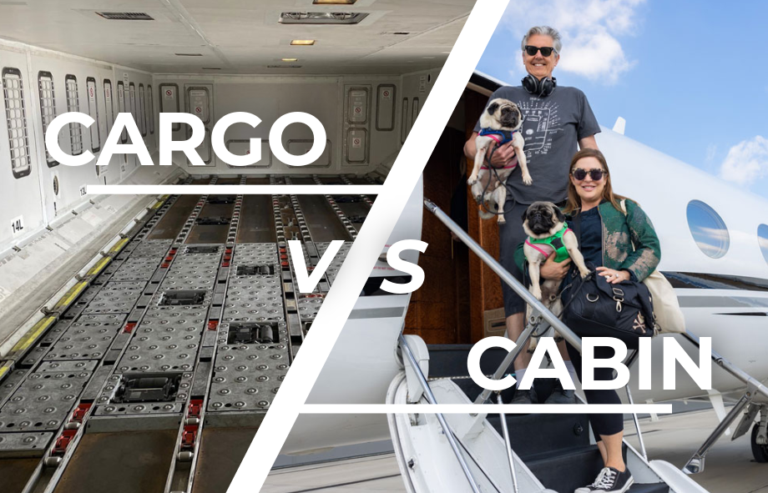
One of the first questions we’re asked here at PetAir is: should my pet travel in the cabin or the hold? It’s a great question – and an important one. The honest answer is that both can be safe and suitable, but the right choice really does depend on your individual pet, the route you’re flying, and what the airline permits.
In our experience, most owners come to us assuming in-cabin is the better option – and we completely understand why. Being close to your pet feels reassuring. But what we find, time and time again, is that once people understand how modern aircraft holds are specifically designed and regulated for live animal transport, their concerns ease considerably. For many pets, the hold is actually the calmer, more comfortable choice.
With over 33,000 pets safely relocated across 300+ destinations, our vet-led team is here to help you make the best decision for your pet’s comfort, safety, and wellbeing.
What’s the Difference Between Cabin and Hold Pet Travel:
In-Cabin Pet Travel
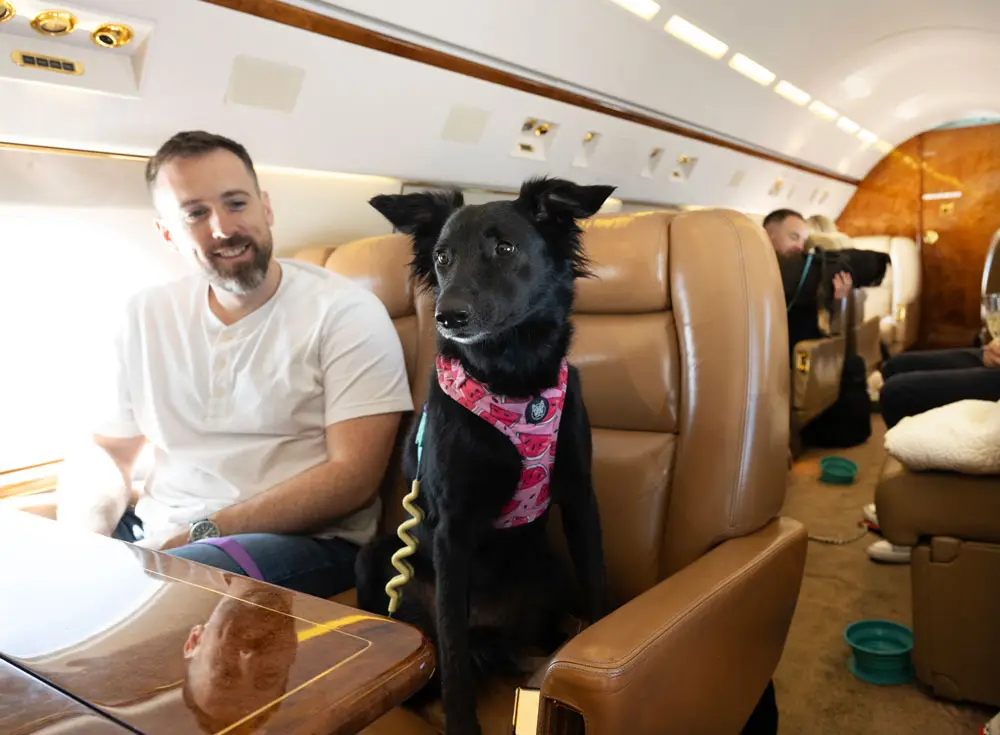
This is where your pet travels inside the aircraft cabin with you, usually in a small airline-approved carrier under the seat. However, when choosing our Superior package, it allows your pet to sit right next to you on a private jet – no crate required.
Key features:
- Private jet travel is a good option for large, old, or snub-nosed pets
- Restricted to certain airlines and routes
- Limited availability
Pet Travel in the Hold
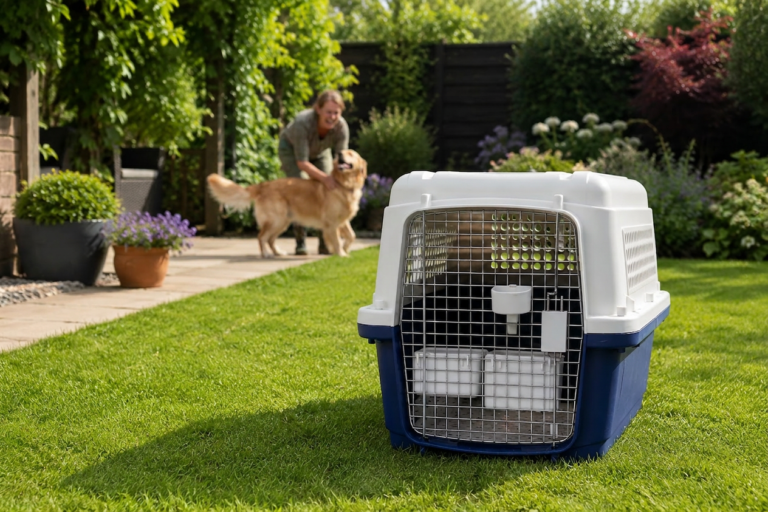
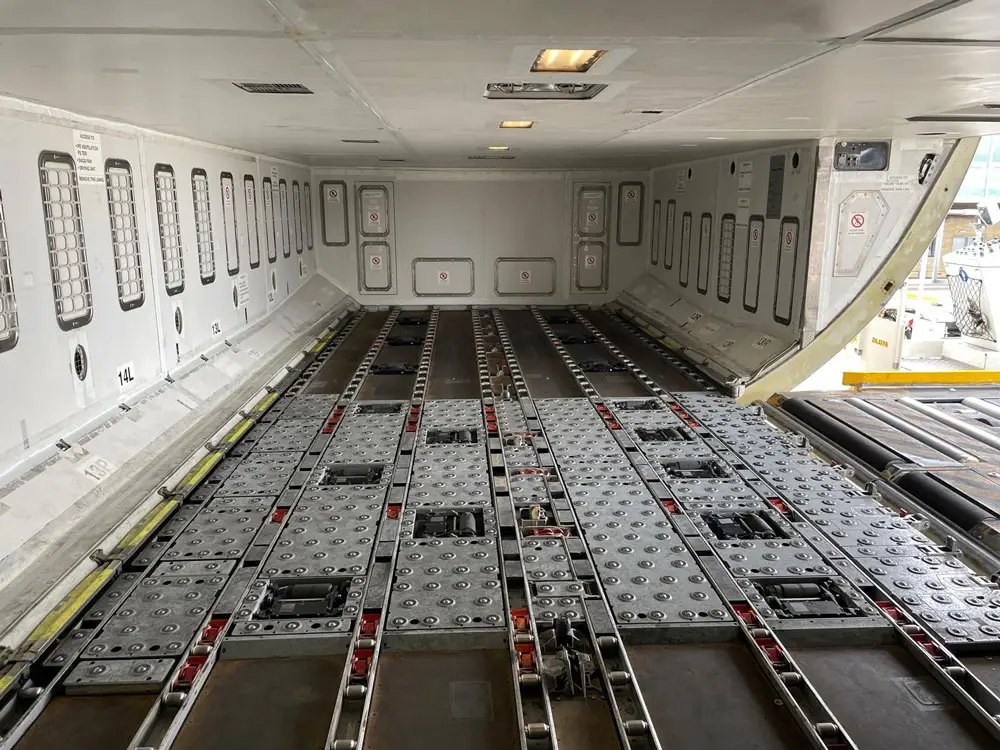
Pets travel in the aircraft’s pressurised, temperature-controlled cargo hold, in a secure, IATA-compliant travel crate.
Key features:
- Same air pressure and temperature range as the cabin
- Specially designated live animal area
- Managed by trained airline staff
- Suitable for most pet sizes
Cabin vs Cargo (Hold): A Side-by-Side Comparison
Here is a side-by-side comparison of your options across the factors that matter most to pet owners:
| Factor | Cargo | Regular Cabin Travel (not supported by PetAir UK, due to UK restrictions) |
Superior Package (private jet) |
|---|---|---|---|
| Availability | Most dogs and cats, any size or breed | Small pets only (usually under 8kg in-cabin) | All dogs and cats, any size or breed |
| Route eligibility | All routes, including long-haul and international | Short-haul, selected airlines; rarely available in/out of UK | Select routes |
| Space & comfort | IATA-approved crate sized to your pet; room to stand, turn, lie down | Cramped under-seat carrier; no room to stand or turn | Plenty of space for your pet to lie, stand or sit |
| Pet stress level | Lower: familiar crate, quiet environment, temperature controlled | Higher: noisy cabin, unfamiliar humans, no routine | Medium: can be noisy, and unfamiliar humans |
| Regulatory level | Required for all regulated destinations | Harder to regulate | Required for all regulated destination |
| Documentation | Full: health certificates, import permits, microchip records - all managed by PetAir | Basic | Full: health certificates, import permits, microchip records - all managed by PetAir |
| Cost | Transparent, all-inclusive pricing with no hidden fees | Can appear cheaper, but rarely available for international moves | The more expensive option |
| Professional support | End-to-end PetAir management from booking to collection available | None - you manage everything alone | Full PetAir management, partnering with K9 Jets |
| Peace of mind | Complete - dedicated team monitoring every stage of the journey | Variable - you are responsible if anything goes wrong | Complete - dedicated team monitoring every stage of the journey |
Is It Safe for Pets to Travel in the Hold?
“Is the hold safe for my pet?” – it’s the question we hear most often, and it’s completely understandable.
Short answer: yes, it is safe.
Modern aircraft are designed to carry animals safely, and when transported correctly, the hold is a quiet, dimly lit, and calm environment that many pets settle into surprisingly well.
Why the hold is often the right choice:
- Reduced sensory stimulation compared to a busy cabin
- More space for your pet to move in a correctly sized crate
- No exposure to unfamiliar passengers or noise
- Professionally handled during loading and unloading
At PetAir, we only use IATA-compliant travel crates and carefully plan each journey to ensure your pet’s comfort from start to finish.
When Is In-Cabin Travel the Better Choice?
In-cabin travel can be a great option in certain situations.
It may be suitable if:
- You have a large pet (only suitable for private jet travel)
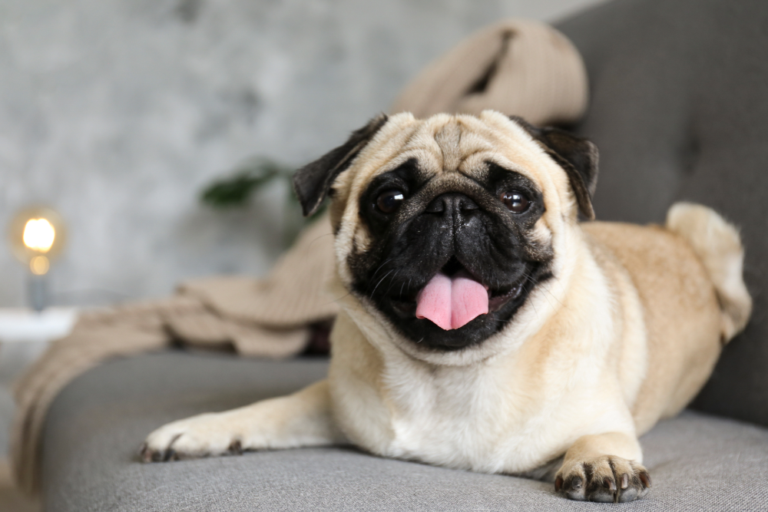
- You have a snub-nosed (brachycephalic) breed
- They are highly anxious when separated from you
- You are flying on a route that allows pets in the cabin
However, it’s important to be aware that:
- Regular cabin spaces are confined
- Our private jet option has limited available – book well in advance
- Pets must remain inside carriers at all times (not applicable for private jet travel)
- Cabin environments can be busy, noisy, and unpredictable
For some pets, particularly those who are easily overstimulated, the cabin environment can actually be more stressful than the hold. If you’re not sure which is right for your pet, we’re always happy to talk it through.
When Is the Hold the Better Option?
Many pets benefit from travelling in the hold, especially for longer or international journeys.
Hold travel is often recommended if:
- You are flying long-haul
- Your route does not allow in-cabin pets (For pets entering Great Britain by air, manifest cargo is generally required, except for recognised assistance dogs and pets travelling on qualifying chartered private aircraft. For pets departing the UK, the available options depend on the airline, route and destination regulations.)
- Your pet prefers a quieter, enclosed environment
- You do not want to pay the premium cost of private jet travel
For pets travelling in and out of the UK, hold travel is often the only compliant option (unless flying by our private jet service), as pets must usually enter as manifest cargo under DEFRA regulations.
How We Keep Pets Safe and Comfortable
At PetAir, safety and welfare are always our priority.
We ensure:
- Vet-approved travel plans tailored to your pet
- Correct crate sizing and training guidance
- Airline selection based on safety records and pet policies
- Temperature-controlled routing and timing
- Full compliance with UK and international regulations
We also guide you on preparing your pet before travel, including crate familiarisation and feeding advice. Learn more about our 24/7 online vet access here.
Tips to Help Your Pet Travel Comfortably
Whether travelling in the cabin or the hold, preparation is key.
Before the flight:
- Introduce your pet to their travel crate well in advance
- Avoid feeding 4–6 hours before departure (unless advised otherwise)
- Ensure they are well hydrated
- Take dogs for a walk before travel
During travel:
- Use absorbent bedding inside the crate
- Include a familiar-smelling item for reassurance (no toys)
- Ensure correct labelling and documentation – PetAir we will ensure all this is correct
Avoid:
- Sedation unless specifically prescribed by a vet and agreed with the airline (generally not recommended by organisations such as the British Veterinary Association)
Frequently Asked Questions
Helping you understand your pet travel options:
Is it cruel for pets to travel in the hold?
No – not when it’s done properly. This is one of the most common worries we hear at PetAir, and it’s one we take seriously. The reality is that airlines operating live animal transport are required to follow strict IATA Live Animals Regulations, which govern everything from crate sizing and ventilation to temperature thresholds and handling procedures. Pets travel in a specifically designated area of the hold – not alongside general cargo.
In our experience, many pets actually settle surprisingly well in the hold. The environment is dimly lit, quiet, and low in stimulation – which suits a lot of animals better than a busy cabin. The key factors are thorough preparation, the right crate size, and careful airline selection, all of which we handle as part of every PetAir journey.
Do pets get enough oxygen and temperature control in the hold?
Yes. The hold used for pets is fully pressurised and climate-controlled, similar to the passenger cabin.
Airlines must confirm these conditions before departure, and pets are not transported if temperatures fall outside safe limits. This creates a stable and regulated environment throughout the journey.
Certain pets, such as brachycephalic breeds, who are more sensitive to temperature and breathing issues should consider seasonal airline embargos. For many of these pets, we recommend looking into our Superior Private Jet package.
Which is less stressful: cabin or hold?
It depends on your pet.
- Cabin travel suits small pets that are highly attached to their owner
- Hold travel often suits pets that prefer quiet, enclosed spaces or are easily overstimulated
It’s a natural assumption that being near you is always less stressful for your pet – and for some animals, it genuinely is. But what we see in practice at PetAir is that many pets are noticeably calmer in the hold. The absence of movement around them, voices, and unpredictable cabin noise can actually make the journey much more settled. The hold, when set up correctly, can feel more like a den than a dark box.
Can I check on my pet during the flight?
No. Pets must remain in their carrier (for regular cabin travel – not private jets) or crate (in the hold) for the entire flight.
Although this can feel worrying, pets are monitored before departure and on arrival, and most will rest for the majority of the journey.
Our private jet option however, does let you check on your pet, as they are sitting right next to you.
Why do pets usually have to travel in the hold into the UK?
The UK requires most pets to enter as manifest cargo to meet strict biosecurity rules.
This ensures all documentation and health checks are completed properly and helps protect against disease risks. As a result, in-cabin travel is rarely permitted for UK arrivals.
Are some pets not suitable for flying in the hold?
Some pets need extra consideration, including:
- Flat-faced (brachycephalic) breeds
- Older pets
- Pets with existing health conditions
This doesn’t necessarily prevent travel, but it does mean the journey should be carefully planned with veterinary input and appropriate airline selection.
How do I know which option is right for my pet?
The best option depends on your pet’s size, temperament, route, and destination requirements. It also depends on how much you are wanting to pay.
While cabin travel can feel like the obvious choice, hold travel is often the most practical and comfortable option, especially for international journeys.
A tailored assessment will ensure you choose what’s genuinely best for your pet.
What happens to pets during flight delays or layovers?
Airlines have specific procedures in place to protect pets during delays or transfers. If your pet is travelling on a connecting flight, they are typically moved to a secure, temperature-controlled animal facility between flights.
During delays, pets remain in a monitored environment and are only loaded when it is safe to do so. When journeys are professionally planned, routes are chosen to minimise transit time and avoid unnecessary stopovers, reducing stress for your pet.
Do airlines monitor pets during the flight?
While pets are not actively “watched” in the same way as passengers, the flight crew is fully aware when animals are on board. The captain is notified, and the conditions in the hold are system-controlled and continuously maintained throughout the flight.
These systems regulate airflow, pressure, and temperature automatically, ensuring a consistent and safe environment from take-off to landing.
Should I sedate my pet before flying?
In most cases, sedation is not recommended for air travel. Leading organisations such as the British Veterinary Association advise against it because sedatives can affect breathing, balance, and your pet’s ability to regulate body temperature at altitude.
Instead, preparation should focus on:
- Crate training
- Familiar bedding or scents
- A calm pre-travel routine
If your pet is particularly anxious, it’s best to speak with a vet about safe, non-sedative options tailored to their needs.
Our Advice
Choosing between cabin and hold travel isn’t about which option is “better” overall, but which is right for your individual pet.
While in-cabin travel can feel reassuring, many owners are surprised to learn that the hold is often a calmer, safer, and more practical option, particularly for international journeys.
At PetAir, we’re here to guide you every step of the way with expert, vet-led advice tailored to your pet.
If you’re planning to fly with your pet and want an honest, expert view on what’s right for them, get in touch. We’ll talk you through the options based on your pet’s needs, not a one-size-fits-all answer.
Give us a call or request a quote online.