




International cat travel can feel daunting, especially when you are worried about how your cat will cope with a long journey. Careful preparation can make the experience more predictable and comfortable.
Think beyond the flight itself. Your cat’s journey can include travelling to the airport, handover, airport handling, the flight, arrival procedures and the journey to your new home. Each stage can add stress, so reducing avoidable surprises matters.
For UK pet owners, paperwork is equally important. Requirements vary by destination, and the rules for returning to Great Britain are separate from the rules for entering another country. Always check current government guidance for the exact journey because requirements and approved routes can change.
1. Check your cat’s travel requirements early
There is no single international pet travel checklist for every destination. Depending on where you are going, your cat may need a microchip, valid rabies vaccination, Animal Health Certificate, Export Health Certificate, import permit, blood testing or other veterinary documentation.
If you are travelling from Great Britain to the EU, current government guidance says residents of England, Scotland and Wales generally cannot use a pet passport to enter the EU. An Animal Health Certificate is normally required, subject to the relevant rules and your circumstances.
For non-EU destinations, an Animal Health Certificate is commonly required, alongside an export application and any country-specific requirements.
- Start with official government guidance for your destination.
- Ask your vet about health and vaccination requirements well in advance.
- Check the airline’s pet policy before booking flights.
- Check the requirements for the return journey to Great Britain.
- Build in extra time for tests, certificates, permits and appointments.
Learn more about Export Health Certificates here, with country specific information.
2. Get your cat comfortable with the travel carrier
For many cats, the carrier is one of the biggest sources of stress. The best time to introduce it is weeks or months before the journey, not on the morning of the flight.
Current feline welfare guidance recommends positive carrier training. Leave the carrier somewhere familiar, make it comfortable with bedding and reward your cat for approaching, entering and spending time inside. Gradually build up to closing the door and carrying the carrier for short periods.
Avoid chasing your cat around the house and forcing them into the carrier whenever possible. This can create a stronger negative association with the carrier and make future travel harder.
- Leave the carrier open at home so your cat can investigate it voluntarily.
- Use familiar bedding and favourite treats.
- Progress slowly from entering the carrier to short periods with the door closed.
- Practice gentle handling and short journeys before the big day.
- If your cat is very fearful, speak to your vet early rather than waiting until travel day.
3. Choose the right cat travel carrier
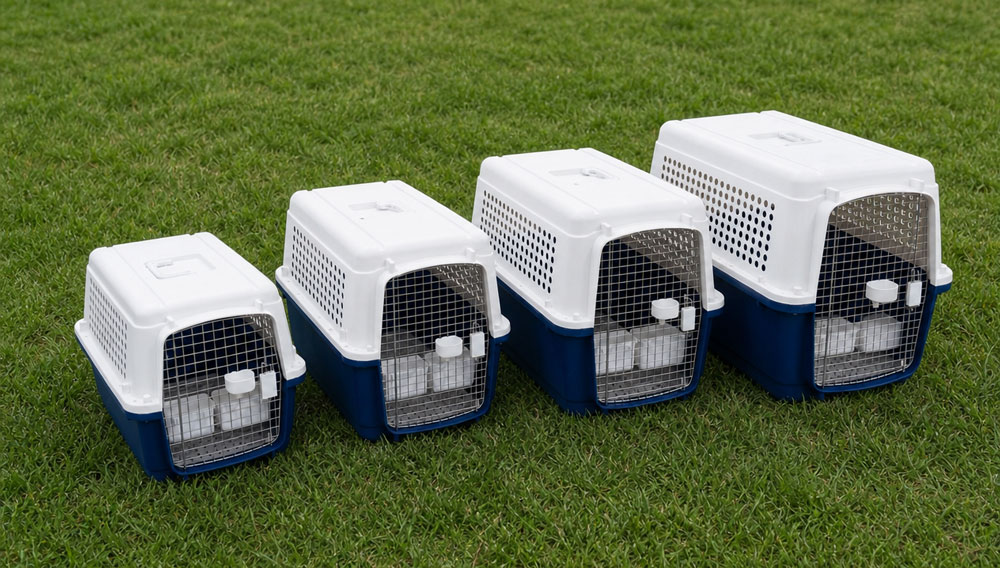
Your cat needs a secure carrier that meets the requirements of the airline and the applicable IATA Live Animals Regulations. Airline requirements can be more specific than general IATA standards, so confirm the exact carrier for the planned route.
For cats travelling as air cargo, container dimensions need to allow the animal to stand naturally, turn around and lie down comfortably. IATA’s current guidance also sets requirements for dimensions and construction.
Do not assume a carrier that works for a car journey will automatically be suitable for air travel. Airlines may have rules covering dimensions, ventilation, construction, water provision, labelling and other details.
PetAir UK will provide the IATA and airline-approved travel crate, perfectly fit for your cat.
4. Help your cat cope with travel stress
Cats can find unfamiliar smells, noises, handling and changes in routine stressful. The aim is not to promise a completely stress-free journey, but to reduce avoidable sources of fear and make the experience as calm and predictable as possible.
- Use familiar bedding or a familiar-smelling item where permitted.
- Keep handling calm and purposeful.
- Avoid unnecessary changes to your cat’s routine before departure.
- Ask your vet whether your cat would benefit from a pre-travel anxiety plan.
- Never give a sedative or calming medicine without veterinary advice.
Do not sedate your cat without specifically being told to by your vet. Any medication should be tested before the journey where your vet considers this appropriate, so you know how your cat responds. Do not experiment with medication for the first time on travel day.
At PetAir, we use Pet Remedy’s calming products on our travel crates and in our kennels – this will help to keep your pet calm throughout their whole journey.
5. Plan feeding, water and toileting
Your cat’s feeding and hydration plan should be based on journey length, your cat’s usual routine, airline requirements and veterinary advice. Avoid major dietary changes immediately before travel.
For longer journeys, arrangements for water, food and toileting need to be considered as part of the travel plan. Your pet travel company and airline should confirm what is required and what can be provided during the journey.
If your cat is prone to travel sickness, gastrointestinal problems or urinary issues, discuss this with your vet before departure. A cat that is medically well and properly prepared is in a better position to cope with a long journey.
6. Choose the safest practical route
When flying internationally with a cat, the shortest route is not automatically the best route. Consider connections, airport handling, temperature, airline acceptance, cargo facilities and the destination’s entry process.
IATA states that its Live Animals Regulations are the worldwide standard for transporting live animals by commercial airlines, while individual airlines and governments may impose additional requirements. This is why an experienced pet relocation team can be useful for complex international journeys.
At PetAir UK, we will help choose the route for you – making sure your cat is put through the least stress as possible.
A simple pre-flight checklist for your cat
- Confirm the destination’s current import requirements.
- Check requirements for returning to Great Britain.
- Confirm the airline accepts cats on the planned route and date.
- Book required veterinary appointments, tests and certificates.
- Check the microchip details and keep contact information current.
- Start carrier training early.
- Confirm the carrier meets the airline’s requirements.
- Agree a feeding, hydration and medication plan with your vet.
- Prepare familiar bedding and clearly identify the carrier.
- Keep copies of required travel documents and emergency contacts.
Frequently asked questions about flying internationally with a cat
Can cats fly internationally?
Yes. Cats can travel internationally by air if they meet destination, airline and government requirements. Plan around the individual cat’s health and welfare and the specific route.
Is flying stressful for cats?
It can be. Unfamiliar handling, noises, smells and changes in routine may cause stress. Carrier training, familiar bedding, calm handling and an individual veterinary plan can help. PetAir offers 24/7 online vet access, allowing you to speak with vets, behaviour and nutrition specialists at any time prior to your flight. Advanced planning and prep can make your cat’s journey much less stressful!
Should I sedate my cat before flying?
Do not give a sedative or calming medicine without veterinary advice. Some cats may benefit from prescribed anxiolytic medication, but the choice and timing should be based on the individual cat and journey.
Can my cat fly in the cabin?
This depends on the airline, route and entry requirements. In most cases, cats will fly in the hold, in a dedicated live-animal area. PetAir offers in-cabin travel via private jet to select destinations.
What size carrier does my cat need for international air travel?
The carrier must meet the applicable airline and IATA requirements and be large enough for your cat to stand naturally, turn around and lie down comfortably. Measure your cat and PetAir will provide the crate for you.
How early should I start preparing my cat for an international flight?
Ideally, start several weeks or months before departure. This gives you time for carrier training, veterinary checks, vaccinations or tests and paperwork.
Does my cat need a microchip and rabies vaccination to travel from the UK?
Requirements depend on the destination and route. Many international journeys require permanent identification and rabies vaccination, with some destinations requiring additional testing or waiting periods.
What paperwork does my cat need to fly abroad from the UK?
It depends on the destination. EU travel commonly involves an Animal Health Certificate for eligible journeys from Great Britain, while non-EU destinations may require an Export Health Certificate and other documents.
Can PetAir help with international cat travel?
Yes. PetAir UK provides vet-led support for international journeys, including flight arrangements, travel crates, documentation guidance and veterinary preparation depending on the package and destination. Learn more about why you should choose PetAir UK here.
Flying your cat internationally with confidence
The most successful international cat journeys are planned around the individual pet. Start early, check the rules for the exact destination and route, prepare your cat gradually and involve your vet whenever health, anxiety or medication is a concern.
PetAir UK is owned and run by vets and has safely relocated more than 33,000 pets to over 300 destinations worldwide. If you are planning an international move, holiday or work relocation with your cat, our team can help you understand the practical steps and options for your journey.
For more information about our 24/7 online vet access service, click here.
Or get a quick quote with us today about flying your cat safely to their new home.