



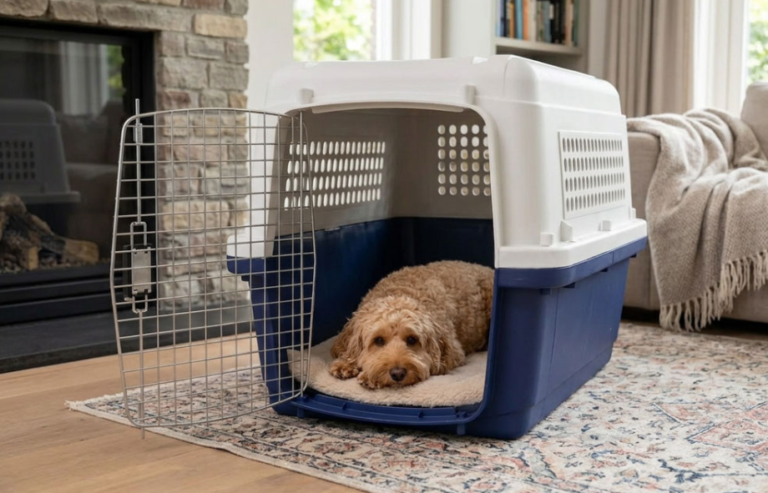
If your dog is travelling internationally by air, crate training is one of the most important things you can do to help them have a safe, calm and comfortable journey. Starting several weeks before departure allows your dog to view their travel crate as a secure, familiar space rather than something to fear.
This week-by-week guide explains exactly how to prepare your dog for their travel crate, along with expert advice from our veterinary-led team.
Please note: Pre-flight crate delivery is available for selected crate types only. Your PetAir travel consultant will confirm the arrangements for your pet.
If you are not having the travel crate delivered in advance, it is still beneficial to crate train your pet in a regular crate prior to their flight.
Why Is Crate Training Important Before an International Flight?
Many owners worry about their dog travelling in the aircraft’s temperature-controlled cargo hold. While this is completely understandable, it’s important to remember that airlines approved for pet transport follow strict welfare regulations, and your dog’s crate becomes their safe space throughout the journey. All aircraft cargo holds for pets are temperature controlled at 18-20 degrees.
A dog that has been gradually introduced to their crate is generally more relaxed because:
- The crate smells familiar.
- They associate it with positive experiences.
- They’re less likely to become anxious during loading and unloading.
- They can settle more quickly during long journeys.
Crate training also helps reduce unnecessary stress hormones, making the overall relocation experience much more comfortable.
When Should You Start Crate Training?
Ideally, begin crate training four to six weeks before your flight.
Some confident dogs adapt within a couple of weeks, while others need longer. Nervous, rescue or senior dogs often benefit from a slower introduction.
The key is never to rush.
Every dog learns at their own pace, and forcing the process can undo weeks of progress.

Week 1: Introduce the Travel Crate
The goal during the first week is simple.
Help your dog see the crate as somewhere good things happen.
Place the crate in a familiar room where your family spends time. Leave the door fully open and allow your dog to explore it naturally.
Try:
- Placing treats just inside the entrance.
- Feeding meals beside the crate.
- Adding familiar bedding.
- Including a favourite toy.
- Praising your dog whenever they investigate.
Never push or force your dog inside.
Instead, let curiosity do the work.
Expert Tip
Travel crates are larger and sturdier than many household crates because they must meet IATA Live Animal Regulations. If possible, train using the actual crate your dog will fly in.
Week 2: Build Positive Associations
Once your dog is happily entering the crate, begin encouraging them to remain inside voluntarily.
Offer high-value treats such as:
- Chicken
- Cheese
- Stuffed enrichment toys
- Long-lasting chews
Feed meals inside the crate.
Initially leave the door open, then briefly close it while your dog eats before opening it again.
Gradually increase the amount of time the door stays shut.
Aim to keep sessions calm and enjoyable.
Week 3: Increase Time Inside the Crate
By now your dog should willingly enter the crate.
Begin asking them to stay inside for longer periods while you remain nearby.
Start with:
- Five minutes
- Ten minutes
- Fifteen minutes
- Thirty minutes
Provide enrichment to keep them occupied.
Avoid making a fuss when opening the door.
The crate should become an ordinary part of daily life rather than a special event.
Week 4: Practise Being Apart
International travel means your dog will spend periods away from you during check-in, loading and customs procedures.
Help prepare them by leaving the room for short periods while they remain comfortably inside the crate.
Return calmly without creating excitement.
Gradually increase the duration until your dog can relax even when you’re elsewhere in the house.
If your dog becomes distressed, shorten the sessions and build back up slowly.
Week 5: Simulate Travel
Now it’s time to recreate some of the sights and sounds your dog may experience during travel.
This might include:
- Carrying the crate short distances.
- Placing it safely inside your car.
- Going on short drives.
- Playing airport or aircraft background sounds quietly.
- Practising loading and unloading.
The objective isn’t to scare your dog.
It’s simply to make unfamiliar experiences feel routine before travel day.
Week 6: Final Preparations
In the final week before departure:
- Continue daily crate sessions.
- Keep routines normal.
- Avoid introducing new training methods.
- Ensure your dog remains relaxed inside the crate.
This is also a good opportunity to check that the crate still meets airline requirements and that all travel documentation is complete.
At PetAir UK, we help owners prepare every aspect of international pet travel. This includes providing IATA approved travel crates, sorting documentation and meeting veterinary requirements.
How to Choose the Right Travel Crate
Not all dog crates are suitable for flying.
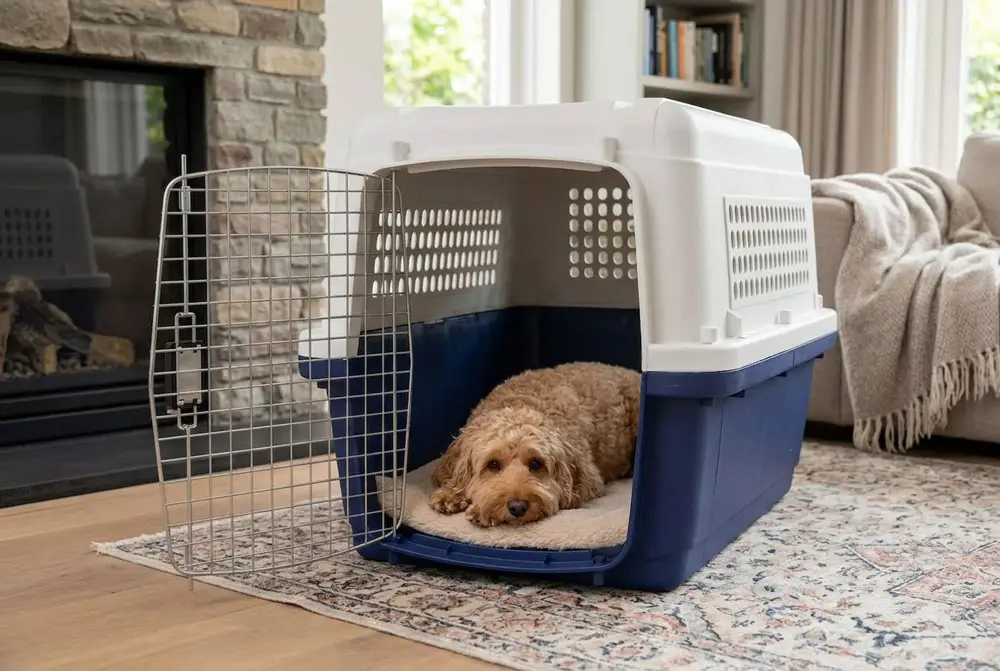
International airlines require crates that comply with IATA Live Animal Regulations (LAR).
A suitable crate should allow your dog to:
- Stand naturally without touching the roof.
- Turn around comfortably.
- Lie down in a normal resting position.
The crate must also include:
- Secure locking mechanisms.
- Ventilation on all required sides.
- Water containers.
- Appropriate absorbent bedding.
Choosing the correct crate size is one of the most important parts of preparing your dog for travel.
PetAir will provide the most suitably sized, IATA approved crate based on your dog’s breed and measurements. This takes the stress of making sure it is airline approved away from you!
Common Crate Training Mistakes
Even experienced owners can accidentally slow down the process.
Avoid these common mistakes:
- Going Too Fast: If your dog isn’t comfortable yet, slow down. Progress should always happen at your dog’s pace.
- Only Using the Crate Before Travel: If the crate only appears shortly before the flight, your dog may associate it with something unfamiliar. Regular daily use builds confidence.
- Using the Crate as Punishment: Never send your dog into the crate after unwanted behaviour. The crate should always represent safety and comfort.
- Leaving Your Dog Too Long Too Soon: Gradually increase crate time. Small successes build lasting confidence.
Should You Sedate Your Dog Before Flying?
No, unless specified to by your vet, you should NOT sedate your dog. However natural calming remedies can be useful.
The British Small Animal Veterinary Association (BSAVA) and the International Air Transport Association (IATA) advise against routine sedation for pets travelling by air because sedatives can affect breathing, blood pressure and temperature regulation, particularly at altitude.
Instead, focus on:
- Early crate training.
- Maintaining normal routines.
- Appropriate exercise before departure.
- Veterinary advice if your dog has specific behavioural concerns.
Extra Support from Our Veterinary Team
Preparing your dog for international travel doesn’t stop with crate training.
PetAir UK’s 24/7 Online Vet service gives owners access to veterinary advice whenever they need it, right up until they fly.
Whether you have questions about crate training, travel stress, medications, feeding schedules or settling into a new country, our veterinary professionals are available to help provide reassurance and expert guidance throughout your journey.
Click below to learn more about our 24/7 vet access service:

Travel Day Checklist
Before leaving for the airport, make sure you’ve:
✔ Completed crate training.
✔ Confirmed your dog is healthy to travel.
✔ Added absorbent bedding.
✔ Packed travel documentation.
✔ Allowed time for exercise and toilet breaks before departure.
✔ Stayed calm, as your dog will often mirror your emotions.
Frequently Asked Questions:
How long does it take to crate train a dog before flying?
Most dogs benefit from four to six weeks of gradual crate training. Nervous or rescue dogs may require longer, while confident puppies may adapt more quickly.
Is crate training essential before international pet travel?
In most cases, yes. Crate training helps reduce stress, encourages your dog to rest during the journey and makes the travel experience much more comfortable. Whether you use the actual travel crate (which we advise) or a regular one, making your pet feel at-ease in a crate prior to the flight is key.
Can I use my dog’s normal crate for flying?
Only if it meets IATA Live Animal Regulations. Many household crates are not suitable for international airline transport. At PetAir, we can provide the crate for you.
What if my dog refuses to go inside the crate?
Go back a step. Encourage exploration with treats, toys and meals, and never force your dog inside. Building positive associations takes time but is far more effective than rushing.
Should I put toys or blankets in the crate?
A familiar-smelling blanket or bedding can often provide reassurance. Depending on airline requirements, toys are often not allowed inside the crate on the day of the flight. PetAir UK can advise what is appropriate for your specific journey.
Will my dog have water during the flight?
Yes. Airline-approved travel crates include accessible water containers that can be refilled by airline staff if required during longer journeys.
Why Pet Owners Trust PetAir UK
International pet relocation involves much more than booking a flight. It requires careful planning, veterinary expertise and a deep understanding of international regulations.
With our 24/7 online vet access service and by providing airline approved travel crates, we’re here to help make the build-up of your pet’s relocation a LOT less stressful – for you and your pet!
As a company owned and run by veterinary professionals, PetAir UK has safely relocated more than 33,000 pets to over 300 destinations worldwide. From selecting the correct IATA-compliant crate to arranging documentation, health certificates and providing ongoing veterinary support, we’re here to make every step of your pet’s journey as smooth as possible.
If you’re planning an international move with your dog, our experienced team can guide you from your very first enquiry through to your pet’s safe arrival.