


If you are moving to Dubai, the idea of being separated from your pet during a long journey can feel daunting. PetAir’s Superior Package, delivered in partnership with K9 JETS, offers an in-cabin private-jet route to Dubai. Your pet travels with you rather than in the aircraft hold, but UAE import rules and the flight operator’s pet arrangements still need to be followed. Here is what to know before you book.
Can dogs and cats fly in the cabin to Dubai?
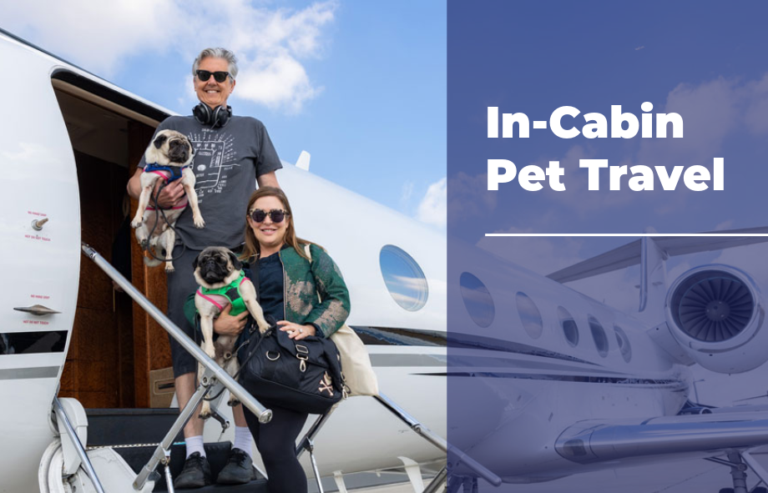
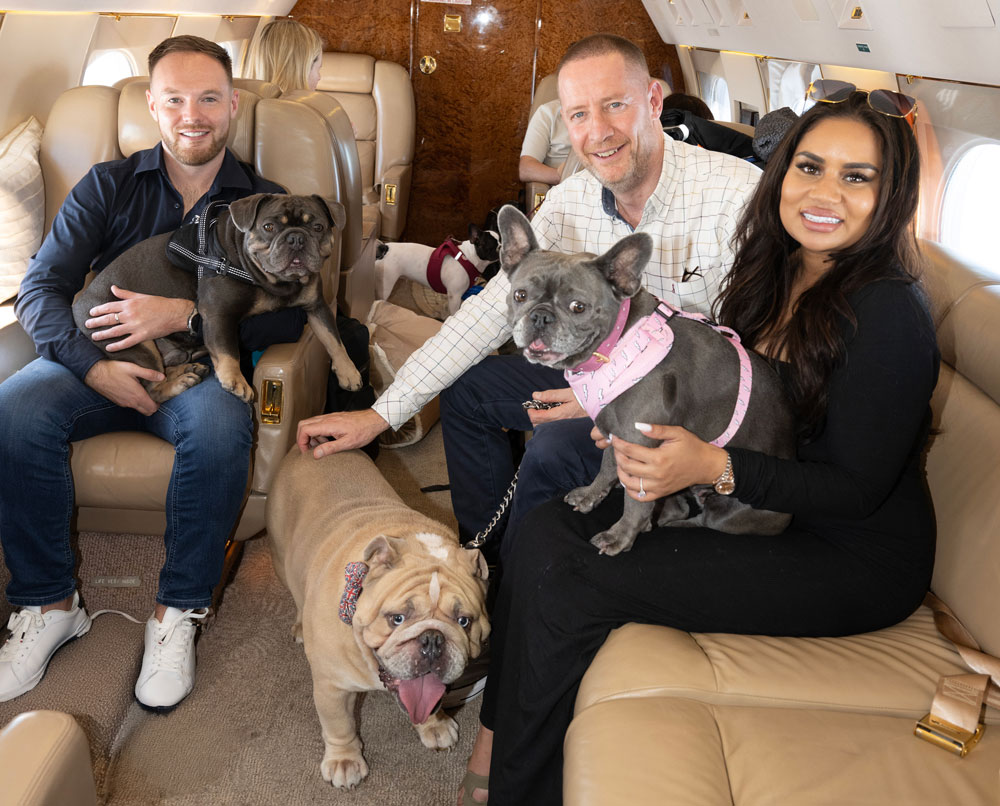
PetAir’s in-cabin option is a private-jet service, not a standard commercial airline pet-in-cabin booking. The UK to Dubai route is offered as a shared private-jet flight, with a limited number of passenger and pet places. Your dog or cat can remain in the cabin with you throughout the journey, subject to the destination’s import rules and the operator’s conditions.
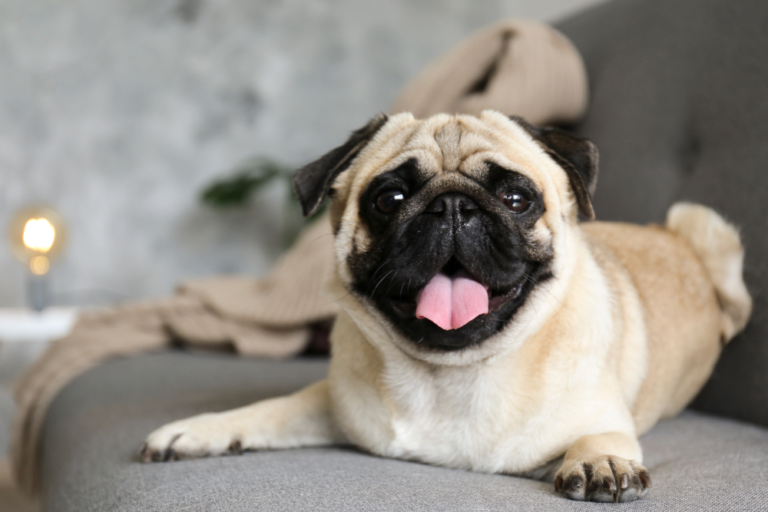
This can be particularly appealing if your dog is large, older, anxious or is a snub-nosed (brachycephalic) breed. However, travelling in the cabin does not automatically make a pet suitable to fly. Ask your vet to assess your pet’s health and fitness for the journey, and check that the breed is permitted to enter the UAE.
What happens for dogs and cats on board?
The arrangements are different for dogs and cats, so it is worth preparing in advance:
- Dogs can sit on your lap or lie beside you. They must remain under control, and a muzzle must be carried for safety. A lead and harness are also sensible essentials.
- Cats must stay in a suitable soft-sided carrier for the flight. PetAir’s current guidance recommends a carrier no larger than 53cm x 43cm. Confirm the exact dimensions and fit with the team before travelling.
- Each seat can accommodate either one pet over 51lb (approximately 23kg), or up to two pets under 50lb (approximately 23kg) each. If travelling with two pets and one is over the weight limit, additional seating may be required. Final arrangements are confirmed when your booking is assessed.
The cabin is a more contained environment than a busy commercial terminal, and your pet stays close to you. Even so, a little preparation helps. Let your dog practise relaxing on a mat or blanket, and help your cat become comfortable spending time in its carrier well before departure.
Dubai pet entry requirements: what paperwork will you need?
Flying in the cabin does not remove the need to meet the UAE’s import requirements. Your dog or cat must be correctly identified, vaccinated and documented before travelling. Requirements can change, so the latest UAE rules and the current UK export health certificate must always be checked for your pet and travel date.
For a typical move from the UK to Dubai, preparation includes:
- A UAE import permit issued before travel. The UAE Ministry of Climate Change and Environment (MOCCAE) currently states that the permit is valid for 90 days from issue.
- A permanent microchip. The microchip number must match the number recorded on the veterinary paperwork and vaccination record.
- A valid rabies vaccination, alongside mandatory vaccinations given strictly in accordance with manufacture guidelines (contact PetAir for advice), are required for the species. Dogs and cats have different vaccination requirements.
- Treatment against internal and external parasites within the required pre-travel window, recorded by your vet. MOCCAE’s published import conditions specify treatment within 14 days before shipment.
- An official veterinary health certificate and the relevant vaccination record or pet passport. For exports from England, Scotland and Wales, the active UK export health certificate for cats and dogs travelling to the UAE is certificate 3926. Northern Ireland has a separate application process.
The UK is listed by MOCCAE as a low-rabies-risk country. Under the published UAE rules, the rabies antibody titre test requirement applies to animals coming from high-risk countries. Your pet’s exact requirements must still be checked against the latest certificate guidance and permit conditions before arrangements are finalised.
Some dog breeds are restricted or prohibited from entering the UAE. Do not assume that a breed accepted for the flight can automatically enter Dubai. Breed eligibility needs to be checked separately against current UAE rules before booking.
Practical tips before your flight
- Start the paperwork early. Your import permit, vaccinations, parasite treatments and health certificate must fit the required timings. Leaving these checks until the last minute can put your travel date at risk.
- Book a vet check. Ask your vet to review your pet’s general health, discuss any existing conditions and confirm that your pet is fit to fly. This is especially important for senior pets and flat-faced breeds.
- Prepare your pet for the cabin. Practise calm settling with your dog’s travel blanket or get your cat used to its soft carrier. Keep these sessions positive and gradual.
- Plan food and toilet breaks. Ask the flight team for its current feeding and hydration guidance. Avoid making major changes to your pet’s routine immediately before departure.
- Check your arrival arrangements. Have copies of the permit, health certificate, vaccination records and microchip details available. Plan how you will travel from the airport to your new home, and make sure your pet has access to water and a quiet place to settle.
How PetAir can help with your move to Dubai
PetAir’s Superior Package brings together in-cabin private-jet travel and specialist pet relocation support. The team can help coordinate the journey, review your pet’s suitability, guide you through the veterinary documentation and support the import process. Vet-led preparation and 24/7 online wellness support are included as part of the package.
PetAir has helped relocate more than 33,000 pets to over 300 destinations worldwide. That experience means you can speak to a team that understands the practical details of international pet travel, as well as how important it is to keep your pet’s welfare at the centre of every decision.
Planning a move to Dubai? Request a pet travel quote online today! The team can then help you check the route, availability and requirements for your dog or cat.
Frequently asked questions
Can I take my dog in the cabin on a flight from the UK to Dubai?
Yes. PetAir offers a UK to Dubai in-cabin option on a shared private jet through its Superior Package, delivered by K9 JETS. This is different from travelling with a pet in the cabin on a commercial airline. Your dog must also meet the UAE’s import and breed requirements.
Can my cat fly in the cabin to Dubai?
Yes. Cats can travel in the cabin on PetAir’s private-jet option, but they must remain in a suitable soft-sided carrier. Confirm the carrier dimensions and arrangements with PetAir before booking.
Can a large dog fly in the cabin to Dubai?
The private-jet service can accommodate large dogs in the cabin, subject to the seat allocation, weight arrangements, route availability and UAE entry rules. The team will need your dog’s breed, measurements and weight to advise on the right arrangements.
Does my pet still need an import permit if it flies in the cabin?
Yes. Cabin travel does not exempt a dog or cat from UAE import rules. An import permit, microchip identification, required vaccinations, parasite treatments and official health documentation are still needed.
Does a UK pet need a rabies titre test to enter Dubai?
The UK is listed by MOCCAE as a low-risk country for rabies. The published UAE rules require a rabies antibody titre test for pets from high-risk countries, rather than low-risk countries. Always check the latest UAE permit conditions and UK export certificate guidance for your pet’s travel date.
Can any dog breed travel to Dubai?
No. The UAE restricts or prohibits the import of certain dog breeds. Check the current UAE breed rules before making a booking. Permission to travel on a particular flight does not override the destination country’s import restrictions.
Is this the same as taking a pet in the cabin on a normal airline?
No. PetAir’s Dubai in-cabin option is a private-jet service. Commercial airlines have their own pet policies and may require pets to travel as cargo or in the hold on many routes.